

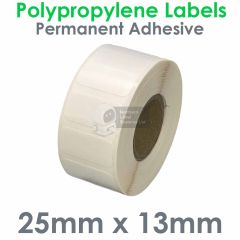
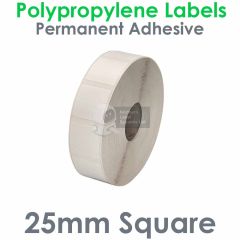
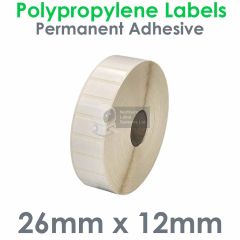
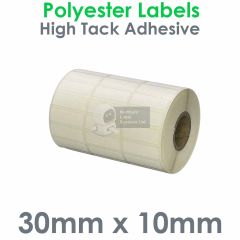
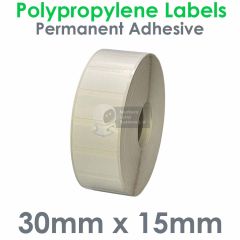
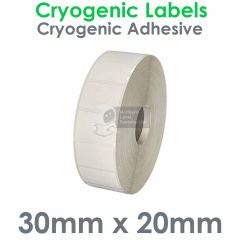
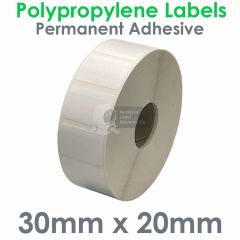
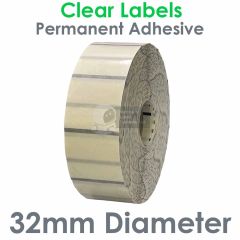
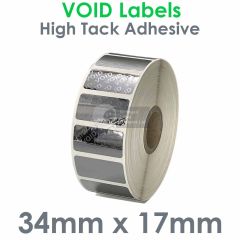
Synthetic Labels for AIMO T200 and T310 Printers
The synthetic labels in this category have been selected for use with the AIMO T200 and AIMO T310 label printers when operating in thermal transfer mode.
Available materials include polypropylene, polyester and other specialist synthetic label films. These materials provide greater durability than standard paper labels and are suitable for demanding applications where labels may encounter moisture, abrasion, oils, chemicals, temperature changes or frequent handling.
The precise performance of a label will depend on the synthetic material, adhesive, thermal transfer ribbon and conditions in which it is used.
Polypropylene Labels
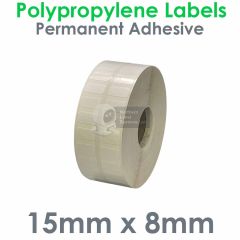
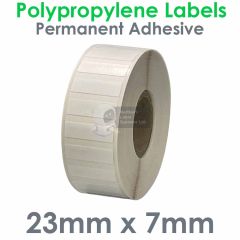
Polypropylene labels are flexible, lightweight and resistant to water. They provide a durable alternative to paper while still conforming well to many product containers and packaging surfaces.
Depending on the product selected, polypropylene labels can be suitable for:
- Product and packaging labels
- Bottles, jars and containers
- Food and beverage packaging
- Health and beauty products
- Retail and promotional labels
- Warehouse identification
- Barcode and QR-code labels
Polypropylene is a good general-purpose synthetic material where better moisture and tear resistance is required.
Polyester Labels
Polyester labels are generally more rigid and durable than polypropylene. They offer excellent dimensional stability and are frequently selected for long-term identification and more demanding industrial applications.
Depending on the material, adhesive and ribbon selected, polyester labels may be suitable for:
- Asset and equipment identification
- Electrical and electronic components
- Rating plates and serial-number labels
- Industrial and manufacturing applications
- Warehouse and racking labels
- Chemical and laboratory identification
- Durable barcode tracking
- Outdoor or exposed applications
Always check the specification of the individual polyester material to confirm that it provides the required resistance to heat, chemicals, weathering or other environmental conditions.
Compatible Label-Roll Dimensions
Synthetic labels suitable for both AIMO printer models should meet the following requirements:
- Printing method: thermal transfer
- Label material: polypropylene, polyester or another compatible synthetic film
- Shared maximum print width: 106mm
- Overall media width: 20mm to 115mm
- Roll core diameter: 25mm (1")
- Maximum outside roll diameter: 127mm (5")
The overall media width includes both the label and its backing paper. Because the backing paper is normally slightly wider than the label itself, you should measure the complete media width rather than only the face of the label.
Although the printers accept media up to 115mm wide, the printed design should remain within the shared maximum printable width of 106mm.
Choosing a Thermal Transfer Ribbon
Synthetic labels must be printed using a ribbon that is compatible with the selected material.
Wax-resin ribbons are suitable for some coated and synthetic materials where good print quality and moderate resistance to rubbing or moisture are required. Resin ribbons are generally recommended for more demanding polyester and polypropylene applications requiring greater resistance to abrasion, chemicals or environmental exposure.
Not every ribbon will print successfully on every synthetic material. The label and ribbon should be tested together under the conditions in which the finished label will be used.
The ribbon should also be slightly wider than the label to protect the printhead and ensure that the complete label width can be printed.
Applications for Synthetic Labels
Synthetic labels can be used for:
- Product and packaging identification
- Asset tracking
- Industrial and manufacturing labels
- Warehouse and racking labels
- Electrical component labels
- Chemical and laboratory labels
- Bottle and container labels
- Long-term barcode identification
- Labels exposed to moisture or frequent handling
Choosing the Correct Synthetic Labels
Before ordering, consider the surface to which the label will be applied and the conditions it must withstand. Temperature, moisture, chemicals, abrasion, outdoor exposure and the required lifespan can all influence the choice of material, adhesive and ribbon.
You should also check the label dimensions and complete backing-paper width. The overall media width must be between 20mm and 115mm, and the printable area should not exceed 106mm if the labels will be used in both AIMO T200 and T310 printers.
The roll must have a 25mm core and must not exceed 127mm in outside diameter.
If you are unsure which synthetic label and ribbon combination to order, please contact us with details of your application. Our team will be happy to recommend a suitable material, adhesive and thermal transfer ribbon.